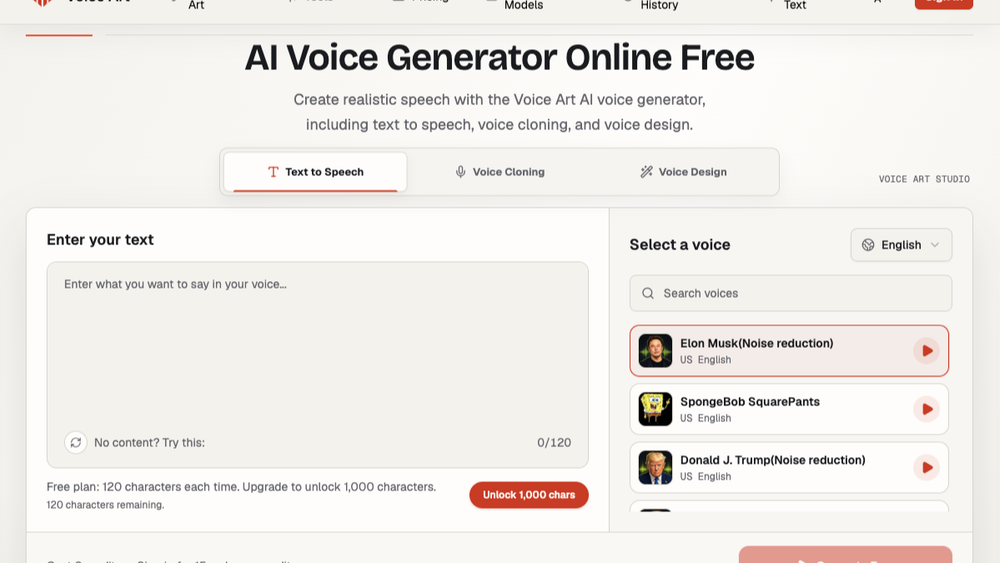
Voice Art is an advanced AI voice generator that empowers users to create realistic speech directly in their browser. It offers a comprehensive suite of tools including text-to-speech, consent-first voice cloning, and intuitive voice design capabilities. The platform is engineered to produce speech with natural rhythm, emphasis, and intent, ensuring generated audio sounds directed and not mechanically read.
Key features of Voice Art include:
- AI Text to Speech: Convert written scripts into high-quality, natural-sounding speech suitable for narration, advertisements, educational content, and product audio. The system focuses on phrasing, emphasis, and pauses for a more human-like delivery.
- AI Voice Cloning: Create private, reusable voice models from approved audio samples. This feature allows creators to maintain consistent voice identity across various projects without the need for repeated recording sessions, ideal for instructors, brand narrators, or specific characters.
- AI Voice Design: Users can describe the desired age, energy, accent, and character of a synthetic voice, enabling the creation of unique vocal styles when existing catalog voices don't perfectly match project requirements.
- Multilingual AI Voices: The platform supports the preparation of localized narrations and international voiceovers within a single browser workflow, catering to diverse global audiences.
- Creator & Developer Workflows: Voice Art facilitates various production needs, from generating downloadable audio assets for content creators to prototyping voice agents and product prompts for developers.
- Downloads & Generation History: All generated audio can be saved to the user's device, and a comprehensive generation history allows users to revisit and reuse earlier outputs, streamlining revisions and ensuring consistency.
Voice Art's browser-based studio integrates public voice auditioning, text-to-speech conversion, private cloning, voice design, and generation history into one seamless workspace. It emphasizes a rapid iteration cycle, allowing users to quickly test voices, revise scripts, compare different takes, and return to saved outputs for later edits. This speed is crucial for content creators, app developers prototyping voice features, and course teams needing consistent narration at scale. The platform operates on a unified credit system, where text-to-speech, voice design, and cloning all draw from a single balance, offering clear value and flexibility. With over 300 public voice styles and directions, and support for multiple language groups, Voice Art provides a versatile solution for a wide range of audio production needs.