Newsletter
Join the Community
Subscribe to our newsletter for the latest news and updates
The software landscape is in constant flux, with new technologies and business models emerging at an unprecedented pace. Amidst this evolution, a powerful segment of the SaaS industry, known as Micro-SaaS, is poised for significant growth.
The software landscape is in constant flux, with new technologies and business models emerging at an unprecedented pace. Amidst this evolution, a powerful segment of the SaaS industry, known as Micro-SaaS, is poised for significant growth. These lean, focused software solutions are designed to solve specific problems for niche audiences, offering a compelling alternative to broad, complex enterprise software. As we look towards 2026, the confluence of advanced AI, increasing SMB adoption of digital tools, and a growing demand for specialized solutions creates a fertile ground for ambitious founders. This article delves into the most promising Micro-SaaS opportunities for 2026, providing expert insights and strategies for sustainable growth.
__
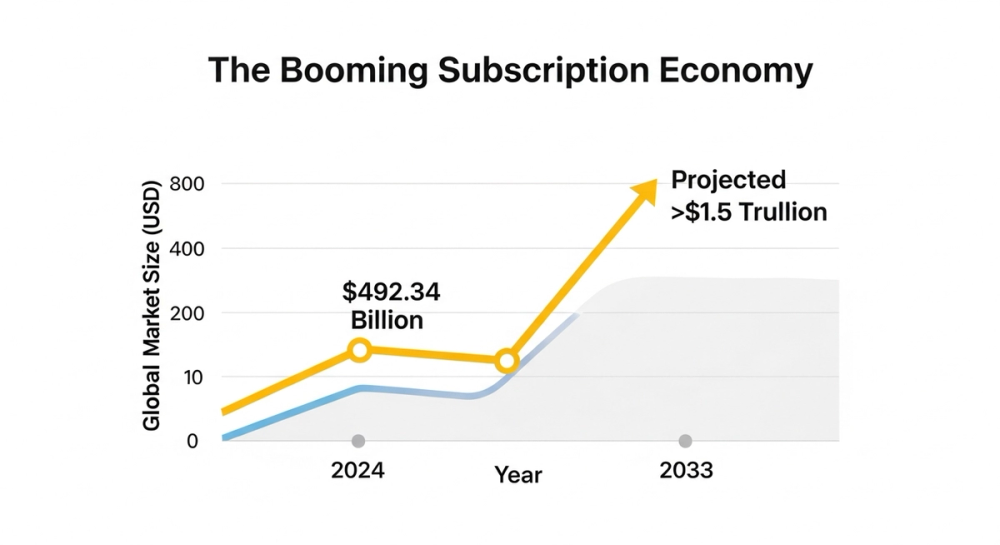
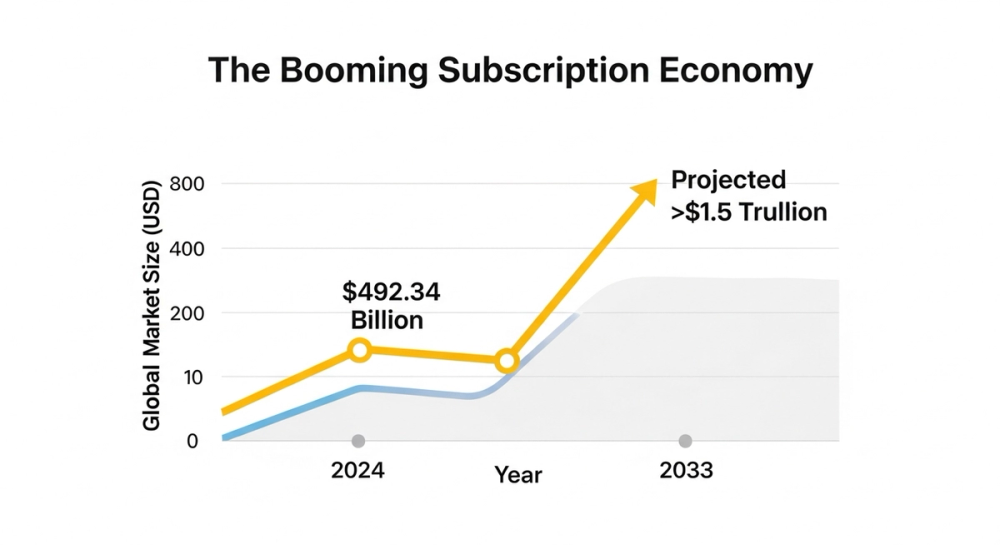
The global subscription economy's projected growth provides a massive tailwind for Micro-SaaS businesses built on recurring revenue.
__
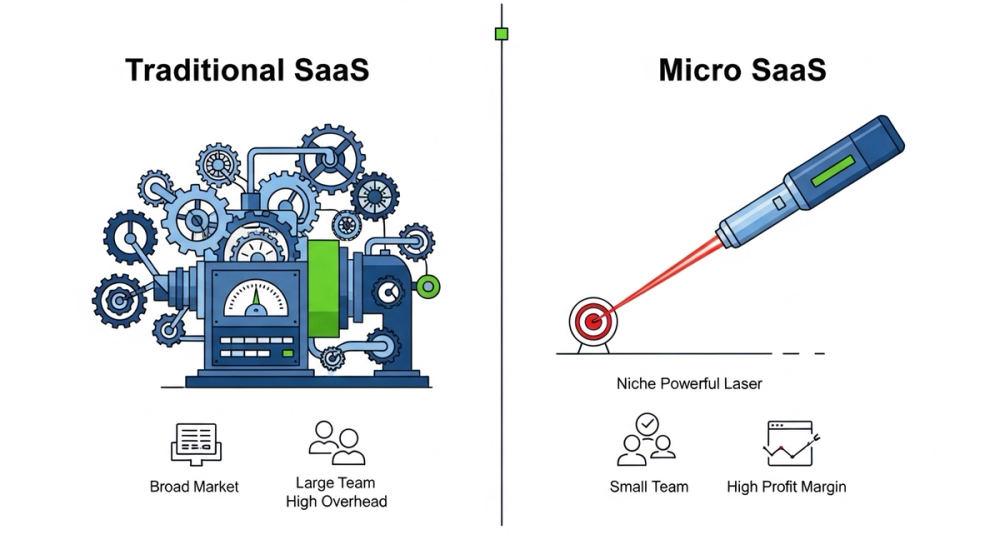
Micro SaaS vs. Traditional SaaS: A visual breakdown of the key differences in focus, scale, and operational model.
Micro-SaaS represents a specific category within the broader Software-as-a-Service (SaaS) industry. Unlike traditional SaaS giants that aim for broad market appeal and extensive feature sets, Micro-SaaS products are characterized by their laser focus. They typically address a single, well-defined problem for a specific customer segment or industry. This specialization allows them to be exceptionally good at what they do, often outperforming larger, more general solutions in their niche.
The core appeal of Micro-SaaS lies in its lean operational model. By concentrating on a narrow problem space, development efforts can be streamlined, marketing becomes more targeted, and customer support can be highly specialized. This efficiency translates directly into profitability. Micro-SaaS companies often boast impressive profit margins, with estimates suggesting an average of 70% to 80%, largely driven by low operational costs and the strategic implementation of automation (The 2023 SaaS Metrics Report). This profitability is a key attractor for entrepreneurs seeking a sustainable and rewarding business venture.
Furthermore, Micro-SaaS solutions are inherently aligned with the dominant business model of the digital age: the subscription economy. The global subscription economy has already reached an impressive $492.34 billion in 2024 and is projected to exceed $1.5 trillion by 2033 (Swell, 2024). Micro-SaaS businesses leverage recurring revenue through subscription models, providing a predictable income stream and fostering long-term relationships with their customer base. This model not only ensures financial stability but also encourages a continuous focus on delivering value and enhancing the product based on customer feedback.
Several converging trends make 2026 a particularly opportune moment for aspiring Micro-SaaS founders. Firstly, the rapid advancement and increasing accessibility of Artificial Intelligence (AI) are reshaping industries. The integration of AI, particularly generative AI and AI agents, is becoming standard across SaaS solutions (Salesmate.io). The U.S. Chamber of Commerce reported that in late 2025, 58% of small businesses were already using generative AI, a figure that has more than doubled since 2023 (U.S. Chamber of Commerce, 2025). This widespread adoption signals a strong demand for AI-powered tools that can enhance productivity, automate tasks, and provide deeper insights, creating fertile ground for AI-driven Micro-SaaS.
Secondly, the sustained growth and increasing reliance on digital tools by Small and Medium-sized Businesses (SMBs) present a vast addressable market. In late 2023, 59% of SMBs anticipated increasing their technology spending in 2024 (SMB Group cited by Workday Blog, 2024). SMBs are actively seeking cost-effective, specialized solutions that can address their unique operational challenges without the complexity or cost of enterprise-level software. This makes them an ideal target for Micro-SaaS offerings that provide targeted value.
Finally, the democratization of development through low-code/no-code platforms and the availability of powerful development frameworks and APIs are lowering the barriers to entry. The market for low-code and no-code platforms is expected to reach $32 billion by the end of 2024 (OMNIUS, 2026). This technological accessibility empowers founders to build and launch sophisticated applications more quickly and efficiently. Combined with the growing demand for specialized solutions that large players may overlook, 2026 is set to be a landmark year for innovative Micro-SaaS ventures.
The inherent structure of Micro-SaaS provides a distinct strategic advantage, enabling founders to build businesses that are not only profitable but also resilient and adaptable. This advantage stems from its core principles: a deep understanding of niche markets, a commitment to customer lifetime value, and the leveraging of lean operations and intelligent automation.
One of the most powerful strategies in the Micro-SaaS playbook is niche specialization, often drawing from the principles of Vertical SaaS. Vertical SaaS solutions are designed to serve the specific needs of a particular industry, offering tailored workflows, terminologies, and regulatory compliance that horizontal SaaS (serving a broad range of industries) cannot match. The vertical SaaS market is experiencing robust growth, projected to reach $369.24 billion by 2033, expanding at a significant 16.3 percent annually (EX NIHILO Magazine, 2025).
Micro-SaaS leverages this vertical specialization by drilling down even further. Instead of serving an entire industry, a Micro-SaaS might focus on a single pain point within that industry. For example, within the healthcare Vertical SaaS market, a Micro-SaaS could focus solely on automating appointment scheduling for dentists or managing patient consent forms. This hyper-specialization allows founders to become true experts in their chosen domain, understand their customer's intricate needs intimately, and build solutions that offer unparalleled precision and value. In a 2023 survey, SaaS companies focusing on vertical markets reported slightly higher growth (31%) compared to those targeting horizontal markets (28%) (Vena Solutions, 2026), further validating this approach.
This deep focus not only differentiates the product but also builds a strong moat around the business. Competitors find it harder to replicate the nuanced understanding and tailored functionality of a highly specialized Micro-SaaS. This allows founders to command premium pricing and foster deep customer loyalty.
Sustainable growth in the SaaS world is rarely about acquiring new customers alone; it's about retaining and maximizing the value derived from existing ones. Micro-SaaS, with its inherent focus on solving specific customer problems exceptionally well, is ideally positioned to achieve high Customer Lifetime Value (CLV). When a Micro-SaaS product truly solves a critical pain point and delivers consistent value, customers are more likely to remain subscribed long-term.
Achieving high CLV requires a holistic approach that goes beyond just product functionality. It involves fostering strong customer relationships, providing proactive support, and continuously iterating based on user feedback. Micro-SaaS can excel here by offering personalized support, understanding the unique workflows of their niche customers, and making it easy for users to integrate the tool into their daily operations. The lean nature of Micro-SaaS allows for more personalized interaction with each customer, making them feel valued and understood. This focus on the individual customer journey contributes significantly to reducing churn and increasing overall CLV, forming the bedrock of sustainable growth.
The "lean" in Micro-SaaS is not just a descriptor; it's a strategic imperative that fuels efficiency and profitability. By concentrating on a narrow set of features and a specific target audience, Micro-SaaS businesses can maintain smaller teams, reduce overhead, and optimize their development cycles. This lean approach allows for rapid iteration and quick adaptation to market changes.
Intelligent automation is a cornerstone of these lean operations. Automation streamlines repetitive tasks, from onboarding new customers and managing billing to generating reports and providing initial customer support. By integrating automation tools and leveraging AI, Micro-SaaS companies can significantly reduce their operational burden. This frees up valuable human resources to focus on higher-value activities, such as product development, strategic growth, and providing exceptional, personalized customer experiences. The global Automation Software market itself is a testament to this trend, projected to grow from $14,250.75 million in 2024 to $32,045.60 million by 2033 (Future Market Report, 2024). For Micro-SaaS, automation isn't just about efficiency; it's about building a scalable and profitable business model that can thrive without requiring a linear increase in headcount.
The landscape for Micro-SaaS in 2026 is being shaped by powerful market forces that are creating both challenges and unprecedented opportunities for founders. Understanding these drivers is crucial for identifying and capitalizing on the most lucrative ventures.
Generative AI, powered by advanced models like those from OpenAI, is no longer a futuristic concept; it's a foundational technology driving innovation across industries. For Micro-SaaS, generative AI opens up entirely new possibilities for creating intelligent, automated solutions. AI agents, capable of performing complex tasks autonomously or semi-autonomously, can power niche applications that were previously unimaginable.
These AI capabilities enable Micro-SaaS to offer hyper-personalized content creation, sophisticated marketing automation, predictive customer support, and highly specialized business process automation. As the U.S. Chamber of Commerce report highlighted, small businesses are rapidly embracing generative AI, with 58% adopting it by late 2025 (U.S. Chamber of Commerce, 2025). Micro-SaaS can tap into this demand by developing AI-powered tools that are accessible and tailored to the specific needs of SMBs, such as AI assistants for customer service, AI-driven market analysis for niche e-commerce sellers, or AI tools for generating specialized marketing copy.
The rise of low-code and no-code (LCNC) development platforms has significantly lowered the barrier to entry for software creation. These platforms enable individuals with limited traditional coding experience to build sophisticated applications by using visual interfaces and pre-built components. The market for these platforms is booming, expected to reach $32 billion by the end of 2024 (OMNIUS, 2026).
For Micro-SaaS founders, LCNC tools offer a pathway to rapidly prototype, develop, and deploy applications. This accelerates the go-to-market strategy, allowing founders to test their ideas quickly and iterate based on early customer feedback. Furthermore, the availability of reusable code components, particularly within popular frameworks like React, allows for more efficient development of complex functionalities. Founders can leverage these components to build custom solutions without starting from scratch, creating highly tailored applications that still benefit from established, well-tested building blocks. This democratization democratizes not just development, but the very creation of valuable SaaS products for underserved niches.
In today's data-driven world, businesses across all sectors are increasingly reliant on insights derived from their data to make informed decisions. However, accessing and interpreting this data can be complex and resource-intensive, especially for SMBs. This creates a significant demand for specialized data analytics tools and automated reporting solutions.
Micro-SaaS can address this need by providing focused dashboards and predictive analytics tools tailored to specific industries or business functions. These solutions can distill complex datasets into actionable insights, enabling businesses to monitor their performance, identify trends, and forecast future outcomes with greater accuracy. For instance, a Micro-SaaS could offer a specialized dashboard for e-commerce businesses that tracks key performance indicators (KPIs) relevant only to their platform, or predictive analytics for customer churn specifically for subscription box services. The integration of intelligent automation here is key, ensuring that data is not only accessible but also processed and presented in a timely and insightful manner, alleviating the burden of manual analysis for the customer.
Across many industries, businesses are grappling with labor shortages and the rising costs associated with hiring and retaining skilled employees. This challenge creates a strong demand for solutions that can automate tasks, improve operational efficiency, and augment existing workforces. Micro-SaaS can step into this gap by providing targeted tools that automate processes previously handled by human labor.
Examples include software that automates customer onboarding, streamlines inventory management, or handles repetitive administrative tasks. By offloading these burdens, Micro-SaaS helps businesses operate more leanly, reduce errors, and maintain productivity even with a smaller team. The automation software market itself is experiencing significant growth, indicating a broad market need for these types of solutions. For founders, identifying operational bottlenecks within specific industries and developing a Micro-SaaS solution to automate those processes presents a clear path to market traction and sustainable growth.
Beyond technological advancements, several key trends are shaping the demand for specialized software solutions. Sustainability and Environmental, Social, and Governance (ESG) reporting are becoming increasingly important for businesses of all sizes. SMBs, in particular, are looking for accessible tools to help them track their environmental impact, manage waste, and report on their sustainability initiatives. A Micro-SaaS focused on simplifying ESG reporting for specific sectors, like manufacturing or agriculture, could find a strong market.
Compliance, especially concerning data privacy, is another critical area. Regulations like GDPR and its global counterparts necessitate robust data management and security practices. Micro-SaaS can offer highly specialized solutions for ensuring compliance, such as tools for managing consent, anonymizing data, or performing regular security audits for specific types of data or industries.
Finally, hyper-personalization is no longer a luxury but an expectation for many customers. Businesses are seeking ways to tailor their offerings, communications, and experiences to individual customers. Micro-SaaS can enable this through sophisticated segmentation, personalized content delivery engines, and AI-driven recommendation systems. By focusing on these emerging trends, founders can identify niche opportunities where tailored software solutions are not just beneficial, but essential.
Drawing on the insights into market drivers, technological advancements, and the core principles of Micro-SaaS, here are ten promising opportunities for 2026:
The Problem: Many businesses, especially SMBs, struggle with creating consistent, high-quality content and executing effective marketing campaigns. This is often due to a lack of time, resources, or expertise.
The Solution: A Micro-SaaS leveraging OpenAI's powerful APIs to provide AI-driven content generation and marketing automation tailored for specific niches. This could include AI copywriters for e-commerce product descriptions, AI-assisted blog post generators for specific industries (e.g., legal, medical), or automated social media campaign planners based on niche trends. Advanced features could include predictive analytics for content performance and automated A/B testing of marketing materials.
Target Customer: Small businesses, freelancers, marketing agencies specializing in specific verticals, solopreneurs.
Technology Stack:OpenAI APIs, React for the frontend, cloud infrastructure, integrated analytics dashboards.
The Problem: Many established businesses rely on complex, multi-step internal processes that are prone to human error, inefficiency, and are difficult to automate with generic tools.
The Solution: Develop AI agents trained on specific industry workflows. These agents could handle tasks like customer onboarding automation for financial services, automated invoice processing and reconciliation for accounting firms, or AI-driven quality control checks for manufacturing. The key is deep vertical specialization, allowing the AI to understand industry-specific jargon and protocols.
Target Customer: Businesses in highly regulated or specialized industries like finance, healthcare, manufacturing, legal services.
Technology Stack:OpenAI's advanced AI models for agent development, industry-specific data sets for training, robust API integrations with existing enterprise software, secure cloud infrastructure.
The Problem: As cyber threats evolve and regulations like GDPR become more stringent, businesses face increasing pressure to protect sensitive data and comply with legal requirements. Generic security solutions are often too broad or too expensive for SMBs.
The Solution: Micro-SaaS solutions focusing on specific aspects of cybersecurity or compliance for underserved niches. Examples include automated GDPR compliance tools for small e-commerce businesses, specialized phishing detection for healthcare providers, or secure data handling solutions for small research firms. These tools would offer automated monitoring, reporting, and remediation guidance.
Target Customer: SMBs in sectors with high data sensitivity or specific regulatory burdens (e.g., healthcare, legal, finance, e-commerce).
Technology Stack: Secure coding practices, encryption, compliance frameworks, user-friendly dashboards for reporting and alerts.
The Problem: Providing proactive customer success and systematically gathering meaningful user feedback is crucial for retention but can be resource-intensive for growing SaaS companies.
The Solution: A Micro-SaaS platform that automates aspects of customer success and feedback collection. This could include intelligent onboarding flows, automated check-ins based on user behavior (using predictive analytics), sentiment analysis of user feedback, and automated reporting of common pain points to product teams. Integration with popular CRM and support platforms like HubSpot would be key.
Target Customer: Growing SaaS companies, especially those with a high volume of users or a focus on recurring revenue models.
Technology Stack:OpenAI for sentiment analysis, React for interactive feedback tools, integration APIs (e.g., for HubSpot, Slack), dashboards for performance tracking.
The Problem: Businesses are increasingly expected to demonstrate sustainability and responsible environmental, social, and governance (ESG) practices. However, SMBs often lack the tools and expertise to effectively track, manage, and report on these metrics.
The Solution: A user-friendly Micro-SaaS that simplifies ESG reporting for SMBs. This tool could help businesses track their carbon footprint, manage waste, monitor energy consumption, and generate reports required by stakeholders or for compliance purposes. It would focus on specific industries or business types that have clear sustainability challenges.
Target Customer: SMBs in sectors like manufacturing, retail, hospitality, and small-scale agriculture.
Technology Stack: Data input modules, calculation engines for ESG metrics, report generation tools, intuitive dashboards for performance overview.
The Problem: E-commerce platforms like Shopify are powerful, but merchants often need specialized tools to optimize specific aspects of their operations or customer experience.
The Solution: Micro-SaaS applications designed to solve a single, critical pain point for Shopify (or other e-commerce platforms) merchants. Examples include advanced product recommendation engines, AI-powered fraud detection for specific product types, automated order fulfillment optimization, or hyper-personalized marketing campaign tools for specific customer segments. These tools would seamlessly integrate with the existing platform.
Target Customer:Shopify merchants, particularly those in high-volume or specialized product categories.
Technology Stack: Platform APIs (Shopify), React for user interfaces, potential use of AI/ML for analytics and personalization.
The Problem: Generic business intelligence tools can be overwhelming and expensive. Many businesses need highly specific dashboards and analytics tailored to their unique operational data and KPIs.
The Solution: Develop Micro-SaaS solutions that provide specialized dashboards and predictive analytics for niche industries or functions. This could be a real-time sales performance dashboard for remote sales teams, an inventory management analytics tool for specific retail verticals, or a website analytics dashboard optimized for app developers showcasing user engagement metrics. The focus is on actionable insights, not just raw data.
Target Customer: Businesses with specific data needs that are not met by generic BI tools; departments within larger organizations.
Technology Stack: Data visualization libraries, database integrations, cloud hosting, potentially React for interactive dashboards.
The Problem: While LCNC platforms democratize development, building highly customized or complex applications still requires significant effort in integrating various services and designing user interfaces.
The Solution: A Micro-SaaS offering curated libraries of reusable LCNC components and specialized web app templates. These could cater to specific platforms (e.g., Airtable components, Webflow templates) or specific functionalities (e.g., a suite of customer portal components, e-commerce checkout templates). The value lies in providing pre-built, high-quality components and templates that accelerate development for LCNC users.
Target Customer: Developers and businesses using LCNC platforms like Bubble, Webflow, or those building with frameworks like React.
Technology Stack:React or similar framework for building the components, clear documentation, a user-friendly platform for browsing and acquiring templates.
The Problem: The financial technology (FinTech) sector is vast, but many small businesses, freelancers, or specific demographics have unique financial management needs that are not adequately addressed by mainstream solutions.
The Solution: Develop Micro-SaaS FinTech solutions targeting specific underserved segments. This could include micro-lending platforms for gig economy workers, specialized accounting tools for artists or creators, simplified payment solutions for micro-merchants in developing markets, or budgeting tools designed for individuals with fluctuating incomes. Automation and subscription models are central to these models.
Target Customer: Freelancers, gig workers, specific demographic groups, small niche businesses, non-profits.
Technology Stack: Secure payment gateways, robust data security, compliance with financial regulations, user-friendly interfaces, potentially integrations with banking APIs.
The Problem: Many industries involve significant "physical work" – tasks performed on-site, in warehouses, construction sites, or field services. These operations often suffer from inefficiencies, poor communication, and lack of real-time data.
The Solution: Micro-SaaS tools that augment physical work through smart technology and automation. This could include mobile-first applications for managing field service technicians, intelligent inventory tracking systems for warehouses, or tools that provide real-time job site progress updates for construction projects. The focus is on improving performance, reducing manual data entry, and enhancing communication for teams working away from traditional office environments.
Target Customer: Field service companies, construction firms, logistics and warehouse operations, retail inventory management.
Technology Stack: Mobile app development (iOS/Android), cloud backend, potential use of IoT sensors, real-time data synchronization, user-friendly interfaces for on-the-go use.
Building a successful Micro-SaaS venture requires more than just identifying a great idea; it demands a strategic approach to growth that prioritizes long-term sustainability and customer satisfaction. The lean, focused nature of Micro-SaaS provides a distinct advantage in this regard, allowing for a more agile and customer-centric growth strategy.
For any subscription-based business, and particularly for Micro-SaaS, maximizing Customer Lifetime Value (CLV) is paramount. This means shifting the focus from single transactions to building enduring relationships with customers. High CLV is achieved by deeply understanding customer needs, consistently delivering exceptional value, and minimizing churn.
Micro-SaaS founders can prioritize CLV by:
By focusing on retaining existing customers, Micro-SaaS businesses not only secure predictable recurring revenue but also benefit from reduced acquisition costs and the power of word-of-mouth referrals.
The lean philosophy is intrinsic to Micro-SaaS success. This approach emphasizes building only what is necessary, testing hypotheses quickly, and iterating based on real-world feedback. For founders, this means:
This approach minimizes wasted development effort, reduces time to market, and ensures that the product evolves in alignment with actual customer needs, rather than perceived ones. This agility is a significant competitive advantage against larger, slower-moving incumbents.
In the crowded digital landscape, effective marketing is crucial for reaching the right audience. For Micro-SaaS, a hyper-targeted content marketing strategy is far more effective than broad, generic campaigns. The goal is to become a recognized authority within the chosen niche.
Key strategies include:
By consistently providing valuable, niche-specific content, Micro-SaaS businesses can attract qualified leads and establish themselves as trusted advisors, driving organic growth.
A loyal community of users can be one of the most powerful assets for a Micro-SaaS business. Engaged users not only provide invaluable feedback but also act as brand advocates, contributing to organic growth and product improvement.
Strategies for building a strong community include:
By fostering a sense of belonging and actively involving users in the product's evolution, Micro-SaaS companies can cultivate fierce loyalty and drive sustainable growth.
The dawn of 2026 presents a golden era for Micro-SaaS. The convergence of advanced AI, widespread SMB digital adoption, and the demand for hyper-specialized solutions creates an unprecedented landscape of opportunity. From AI-powered content automation and vertical AI agents to niche compliance tools and e-commerce enhancements, the potential for innovative Micro-SaaS ventures is vast.
The strategic advantage of Micro-SaaS lies in its inherent focus, agility, and commitment to lean operations. By prioritizing customer lifetime value, leveraging intelligent automation, and mastering niche marketing, founders can build profitable and sustainable businesses that cater to precise market needs. The democratization of development through low-code/no-code tools further lowers the barrier to entry, empowering a new generation of entrepreneurs to create impactful software solutions.
To seize these opportunities, aspiring founders must embrace deep specialization, understand their target customer intimately, and commit to continuous iteration and exceptional user experience. By identifying specific pain points and leveraging emerging technologies like AI and robust component-based development, the next wave of successful Micro-SaaS companies will undoubtedly shape the future of software for years to come. The journey begins with identifying the right niche and building a lean, customer-centric solution designed for sustainable, profitable growth.